ב"ה
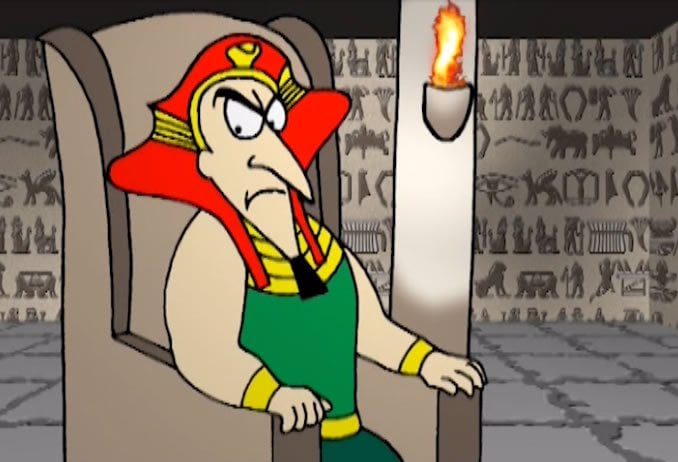
Ever feel like you don’t know enough Torah to teach anyone? Rabban Yochanan ben Zakkai saw it differently: If you know even one line more than someone else, you already have something the world needs. Through his dramatic escape from Jerusalem and his vision of Jewish survival, this class reframes Torah learning as a responsibility, not a personal achievement. Teaching even a little becomes an act of courage, continuity, and spiritual rescue.
Part 2: The Desert of Sinai
You may already know that the giving of the Torah -- which we celebrate on the holiday of Shavuot -- took place at Sinai. But what is Sinai? The Torah speaks of a wilderness called Sinai as well as a mountain by the same name. What is the difference between the desert and the mountain? And how does that shape our understanding of what happened there years ago?
Letters and Numbers of Torah - Bamidbar
After the general census of the Jewish people, Moses takes a separate census of the tribe of Levi, including the family of Aaron the high priest. In the verse (Numbers 3:39) “All the countings of the Levites that Moses and Aaron counted,” the word “ve-Aharon” (and Aaron) has five dots above it. One explanation of these dots is that they tell us that Aaron himself was not counted in the census of the rest of his tribe. What makes Aaron unique?
The Tzadik and the Baal Teshuvah
In interpreting the verse in the Song of Songs, "If only you would be to me a brother", our Sages differ as to whether our request of G-d is to treat us as Yosef treated his brothers who had sold him or as Yosef treated his innocent younger brother Binyamin. This class will reconcile the two views and in so doing will address the contrasting virtues of the righteous (tzadik) and the penitent (baal teshuvah) and where they ultimately converge. (Based on the maamar "Kedoshim Tiheyu" Sefer Mamorim Toras Menachem vol. 3 p. 249)
“G-d desired to bring merit upon the Jewish people; therefore He gave them Torah and
Mitzvos in abundance.” G-d is certain that we will use the great opportunity He offers us to
make Him proud. Thus laden with a treasure-load of good deeds, good words and good
thoughts, we prepare ourselves to receive the Torah—in all its richness—on Shavuos.
Part 1: The Mountain of Sinai
You may already know that the giving of the Torah -- which we celebrate on the holiday of Shavuot -- took place at Sinai. But what is Sinai? The Torah speaks of a wilderness called Sinai as well as a mountain by the same name. What is the difference between the desert and the mountain? And how does that shape our understanding of what happened there years ago?
Part 2: The Desert of Sinai
You may already know that the giving of the Torah -- which we celebrate on the holiday of Shavuot -- took place at Sinai. But what is Sinai? The Torah speaks of a wilderness called Sinai as well as a mountain by the same name. What is the difference between the desert and the mountain? And how does that shape our understanding of what happened there years ago?
Parsha Naso
“On the second day Netanel Ben Tzuar, the prince of Yissachar, offered. He offered his sacrifice ." (Numbers 7:18-19) Why is the word "offered" (hikriv) written twice? Also, why in the second time it's written is it missing a yud? Discover the connection between the missing yud and the holiday of Shavuot which celebrates the giving of the Torah.
The Haftorah of Shavuot
Why Ezekiel’s vision of the “divine chariot” is the chosen haftorah reading on Shavuos, when it would appear that other scriptural passages that refer directly to the giving of the Torah would make a more appropriate choice, inasmuch as Ezekiel makes no such reference at all! (Based on Likkutei Sichos, vol. 33, p. 18.)
The Torah was given to us through Moshe, G-d's most faithful servant. And every single Jew, boy or girl, inherits the torah for himself or herself. Whether they have studied Torah for years, or only know a very little bit, it is their inheritance - to learn and to keep, the very nicest present that G-d gave.
Get the Chabad.org Video app